Saturday, June 22, 2019


BANKING SECTOR IN SRI LANKA

The Banking sector in Sri Lanka, which comprises Licensed Commercial Bank (LCBs) and Licensed Specialized Banks (LSBs), dominates the financial system and accounts for the highest share of the total assets in the financial system. Banks play a critical role within the Sri Lankan financial System, as they are engage with in provision of liquidity to the entire economy, while transforming the risk characteristics of assets.


  • ·         Licensed commercial Banks
  • ·         Licensed Specialized Banks


Licensed Commercial Bank
Licensed Commercial Bank is permitted to accept demand deposits from the public and maintain current accounts and engage in a full range of foreign currency activities. There are 26 commercial bank in Sri Lanka. Those bank can categorize as follows.

State banks-02
Domestic Private banks-11
Foreign banks-13


·         Amana Bank
·         Axis Bank Ltd
·         Bank of Ceylon
·         Bank of China Limited
·         Cargills Bank Ltd
·         Citibank N.A.

·         Commercial Bank of Ceylon PLC
·         Deutsche Bank AG
·         DFCC Bank PLC
·         Habib Bank Ltd
·         Hatton National Bank PLC
·         ICICI Bank Ltd

·         Indian Bank
·         Indian Overseas Bank
·         MCB Bank Ltd
·         National Development Bank PLC
·         Nations Trust Bank PLC

·         People's Bank
·         Public Bank Berhad
·         Sampath Bank PLC
·         Seylan Bank PLC
·         Standard Chartered Bank
·         State Bank of India

·         Union Bank of Colombo PLC


Licensed Specialized Banks

The licensed specialized banks are the financial institutions which have obtained a licensed from the central bank to conduct specialized banking business under the banking Act. There are 07 specialized banks in Sri Lanka.

State banks -06
Private banks-01


LSBs
Housing Development Finance 
Corporation Bank of Sri Lanka 
(HDFC)
Lankaputhra Development Bank Ltd.
National Savings Bank 
"Savings House"
Pradeshiya Sanwardhana Bank
Sanasa Development Bank PLC
Sri Lanka Savings Bank Ltd
State Mortgage & Investment Bank


What are the assets and Liabilities of a bank? 
·         The assets of a bank are the outstanding loans of their customers. Additionally, the bank would probably have investments of its own that would be assets to the bank, as well as the normal assets of property, fixtures and equipment.
·         The liabilities of a bank are the customer checking, saving or investment account deposits. Additionally, normal liabilities such as the bank’s own loans payable or other similar obligations would be liabilities, just as they are in any other business.
Risk in the banking sector
There are many types of risks that banks face. credit risk, market risk, and operational risk are the three major risks. The other important risks are liquidity risk, business risk, and reputation risk.

Credit risk:  risk of losses that result from the inability of the bank's clients or other stakeholders to meet their financial commitments

Market risk: This risk, generated by trading activities (interest rates, foreign exchange, loss of value of financial instruments.)

Operational risk:  risk of loss resulting from inadequate or failed internal processes, people and systems or from external events.

Sunday, April 7, 2019

Central Bank of Sri Lanka logo.png CENTRAL BANK OF SRI LANKA


Central Bank of Sri Lanka is the monitory authority of Sri Lanka and the apex institution in the country's financial sector. it was established in 1950 under the monitory Law Act No.58 of 1949. it is a government-owned semi-autonomous body, and amendments to the Monitory Law Act in December 2002,is governed by five-member Monitory Board, comprising the governor as chairman, the secretary to the Ministry of Finance and planning, and three members appointed by the president of Sri Lanka, on the recommendation of the minister of finance, with the concurrence of the constitutional Council. 

Vision 
           " A credible and dynamic bank contributing to the prosperity of Sri Lanka." 
Mission 
"Maintaining economic and price stability and financial system to support sustainable growth through policy stimulus, advice, commitment and excellence." 

Objective of the Central Bank

 There are two main objective of the Central Bank. then,
           • Maintaining economic and price stability
           • Maintaining financial system stability

The two objectives are correlated and complement each other. Ensuring financial system stability is of prime importance as monetary policy is transmitted through financial intermediaries (institutions) to achieve price stability. Price stability is important for financial system stability as interest rates, exchange rates and other asset prices move in response to changes in the general price level, impacting on the risk profile of financial institutions. Economic, price and financial system stability are necessary for sustained economic growth.

Price stability
 Price stability is interpreted to mean low and stable inflation. Low inflation or price stability fosters sustainable long-term economic growth and employment. The CBSL uses monetary policy measures to control inflation

Financial system stability-
Financial system stability can be defined as the ability of the financial system to perform its main functions of resource mobilization and allocation, risk management and the settlement of payments, effectively at all times, even under stressful circumstances. Therefore a stable financial system is typically characterized by the effective functioning of financial institutions, markets and infrastructure.

Function of Central Bank of Sri Lanka
Core Functions

(a)   Conduct of monetary policy.

The CBSL conducts monetary policy to maintain price stability in the domestic economy. Monetary policy operates primarily by influencing the cost and/or availability of money. This is done through the interest rate and the credit availability mechanism.

(b)   Conduct of exchange rate policy.

A flexible exchange rate system was adopted in June 2001. The exchange rate is determined by market forces of demand and supply, reflecting the macroeconomic fundamentals in the economy. The CBSL may intervene in the foreign exchange market to prevent excessive volatility in exchange rates and to maintain a comfortable level of external reserves

(c)   Management of the official international reserves.

The CBSL manages the official international reserves of the country. The MLA stipulates that the CBSL should maintain adequate foreign exchange reserves in liquid foreign currencies and a small reserve in gold to maintain the international stability of the Rupee and freedom in current international transactions.

(d)   Oversight of the financial system.

As part of its mandate of financial system stability, the CBSL undertakes surveillance and oversight of the entire financial system taking into account its interaction with the real economy to monitor and limit systemic risks which could lead to financial and economic crises


(e)   Licensing, regulation and supervision of banks and selecting non – bank financial institutions.

The CBSL is responsible for regulating and supervising banks and selected non-bank financial institutions to promote their soundness and to safeguard the interests of depositors and investors. The regulation and supervision of individual financial institutions is referred to as micro prudential policy

(f)    Provision of settlement facilities and the regulation of the payment system.

The maintenance of a well-functioning and secure payment and settlement system is an essential ingredient for a stable financial system. In terms of the Payment and Settlement Act, the CBSL is authorized to regulate and supervise payment, clearing and settlement systems.

(g)   Issue and distribution of the national currency.

The CBSL has the exclusive right to issue currency notes and coins that are the legal tender in Sri Lanka. There is no maximum limit imposed on the issue of currency. The issue of currency is primarily based on the transaction demand for money.

(h)   Compilation and dissemination of economic data and statistics
.
The CBSL compiles statistics required to formulate macro-economic policies and disseminates information on the economy to the public. This includes statistics on money, banking and the financial sector, balance of payments, national income, prices, wages and employment, agriculture, industry, trade and services, government finance and public debt. The CBSL also conducts economic, financial and business surveys.

(i)     Acting as the banker and financial adviser to the Government.

As banker to the Government, the CBSL maintains the accounts of and provides banking facilities to Government departments, agencies, institutions and certain statutory boards. The CBSL may give guarantees in favor of the Government. The CBSL also provides provisional advances to the Government.

Agency Functions
      In addition, the CBSL also performs the following agency functions on behalf of the Government of Sri Lanka:

(a) Management of the public debt.
(b) Foreign exchange management.
(c) Fund management and acting as the custodian of the Employees’ Provident Fund.
(d) Facilitating financial inclusion.
(e) Financial intelligence services to detect and prevent money laundering and terrorist   financing.


Sunday, March 24, 2019

History of Sri lanka Banking System

When Sri Lanka or then known as Ceylon was was under the reign of the Sinhalese kings and even the Portuguese(1505-1656) and Dutch (1656-1796), banks and banking were still alien to Sri Lankan culture.it was only during the British colony(1802-1948) that Banking was introduce to Sri Lanka.Two years after independence The Central Bank of Sri Lanka was established in 1950 for maintain an active monitory policy regime and a dynamic financial sector to support and promote economic growth.


History of Currency in Sri Lanka

                The Sri Lankan Rupee is the unit of currency used in Sri Lanka, symbolized by Rs, or SLRS to distinguish it from other Rupees.The other rupee is sub devided into 100 cents.
                            The British pound became ceylon,s official currency in 1825, replacing in the rixdollar Ceylon, at a rate of a found =13 1/3 Rixdollars,and British Silver coins became legal tender.
        Sri Lankas Currency-use can be divided into following  periods.
  1. Anuradhapura Era
  2. Polonnaruwa to Kotte Era
  3. Kandy Era 
  4. Colonial Era
  5. Post-independence period since Establishment of the Central Bank of Ceylon  


Coins used in Anuradhapura Era


There are many information about trade and currency use during the anuradhapura Era.Many records suggest that the production and distribution of coins were done systematically.At the time, the director in charge of coins production was known as ''Rupakada''. The following coins was used by Anuradhapura Era.

  • Kahapana
  • Swasthika coins 
  • maneless lion coins
  • Lakshmi plaques
  • Kahawanu or Lankeshwara Coins
  • Foreign coin 


Coins used Polonnaruwa to Kotte Era


Kings of Chola dynasty that rule from 1017-1070 A.D, issued a ''Kahawanu'' that was minted in the last half of the Anuradhapura Era.It was made of copper.A unique characteristic of these coins was that each one bore the name of the king in power at the time of its production.The following coins was used in polonnaruwa Era.
  • Massa Coins
  • Dambadeni coins
  • Lion Coins
  • Cetu Coins


Coins used in Kandy Era


Kandy was the last capital of the sinhala monarchy.1815 was sign transferring Sri Lanka's autonomy to the British.The portuguese and Dutch eshtablished in the maitime areas during Kandyam Era.According to historical text a few different types of currency were in use during this Era.
  • Koku coins
  • Dambadeni kasi
  • salli
  • Indian Waragama
  • Tuttu
  • panama
  • Tangama


Colonial Era


Sri  Lanka was was colonized by the portuguese, the Dutch and the English respectively.
       Portuguese  Period - Portuguese turned their attentive eye towords the prosperous trade center that was Sri Lanka.They took control of the coastal areas.

Coins used in Portuguese Period

  •           Malacca
  •           Gini Massa
  •           coins of saints
Dutch Period-After Dutch acquired the Portuguese fort, the dutch made a treaty with king Rajasinghe 2.section 14 of the treaty contains a multitude of rules regarding use of money.unless sanctioned by the king or the Dutch government, the acts of printing,minting counterfeit coins or circulation was deemed illegal.

British Period-There are two types of coins used for transactions in Sri Lanka.The first was a gold coin minted in Madras known as 'Tharaka pagodi' or the Start pagodi. The second types of coins was a copper one.

Subsidiary Currency Notes


Under the provisions of the emergency power acts.1939 and 1940 the board of currency was authorized to issue denominations below one rupee to meet the shortage of coins.The board commissioners issued subsidiary notes for the value of 5 cents, 10 cents, 25 cents, and 1  rupee.of these notes, carried imprints of postage stamps of 2 cents and 3 cents.
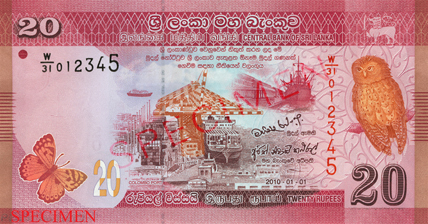
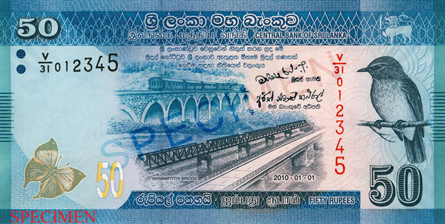
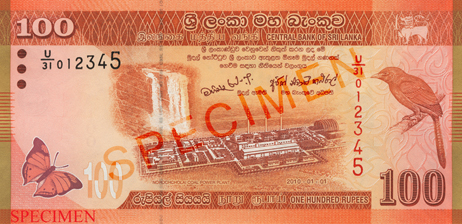
in addition to these subsidiary notes, the Board of Commissioners issued notes worth 1 rupee, 2 rupees, 5 rupees, 5 rupees, 10 rupees, 50 rupees, 100 rupees, 500 rupees, 1000 rupees.

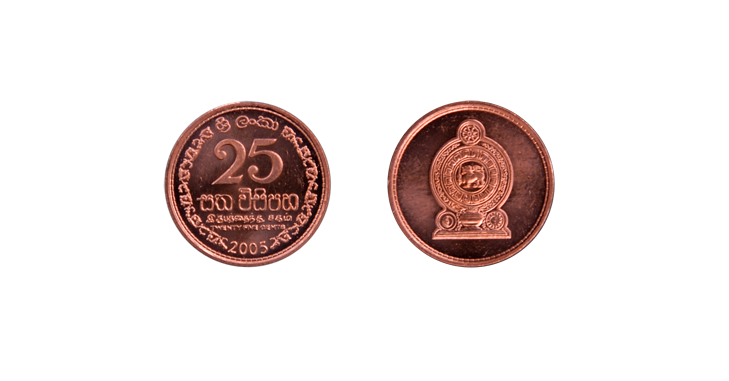
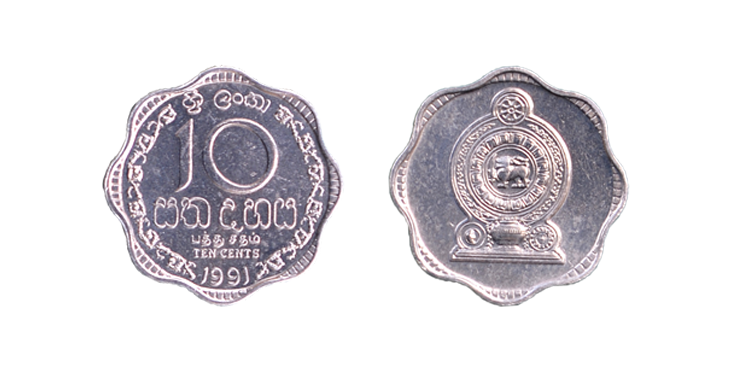
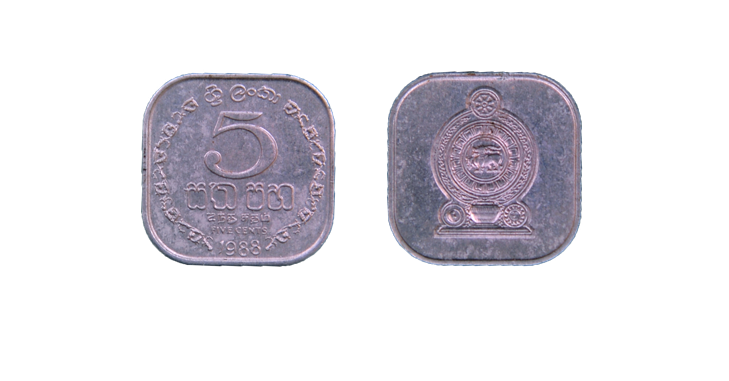
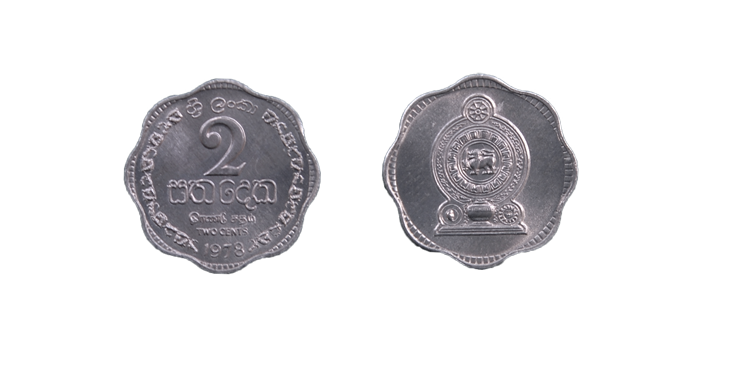
Coins in circulation  

           The central bank of Sri Lanka has the sole right and authority to issue currency in Sri Lanka as stipulated in the monitory Act No.58 of 1949.
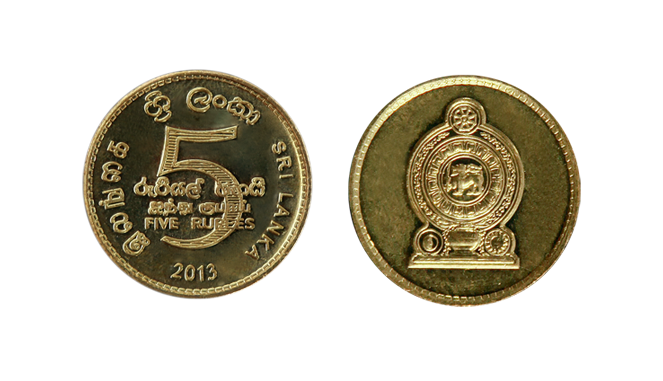
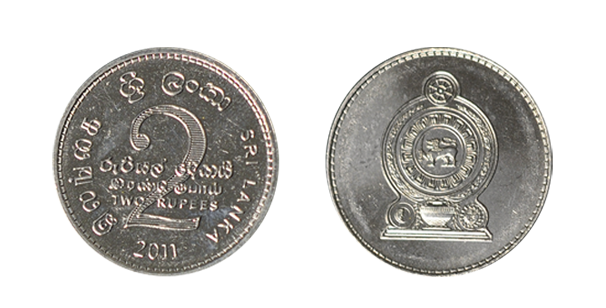
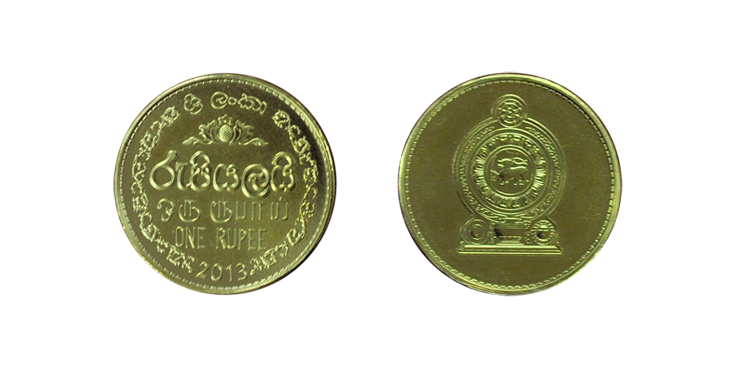
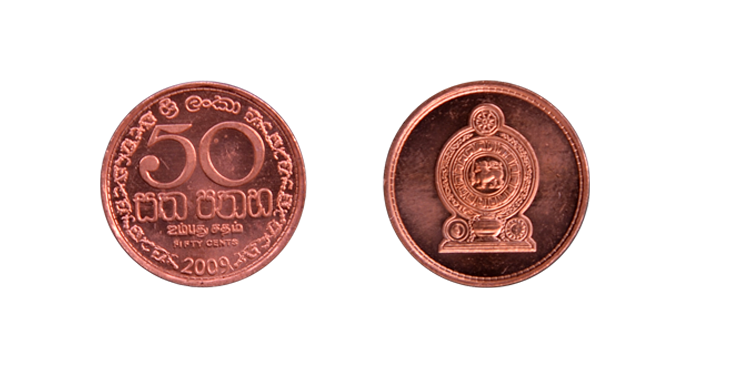
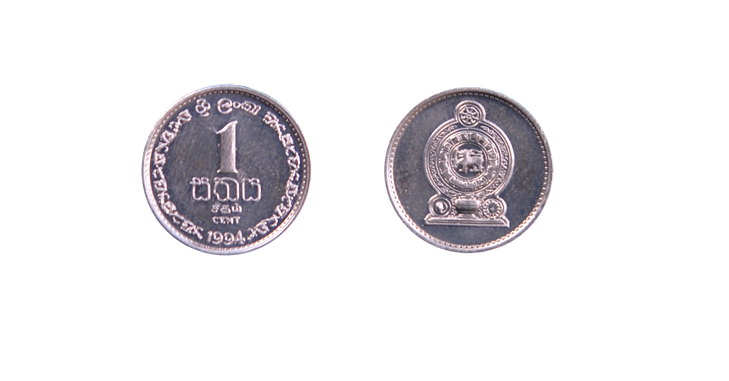
 The denominations of coins mostly in circulation are;

Rs. 10

Rs. 5

Rs. 2


 Rs. 1

 50 Cents

 25 Cents


 10 Cents

 5 Cents

 2 Cents


 1 Cent


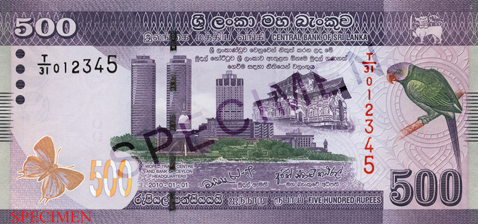
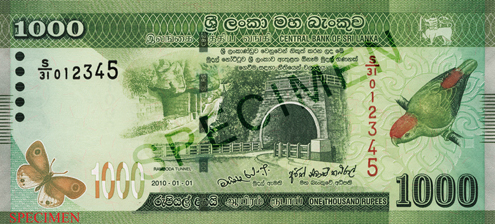
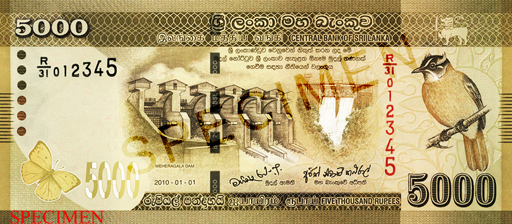
Current Notes Series

            After establishment of the Central Bank of Sri Lanka in 1950, eleven note series have been issued under eleven themes. 

Commercial Bank PLC Product of the bank, 1.       Savings Accounts A.     Main Accounts                                 I....